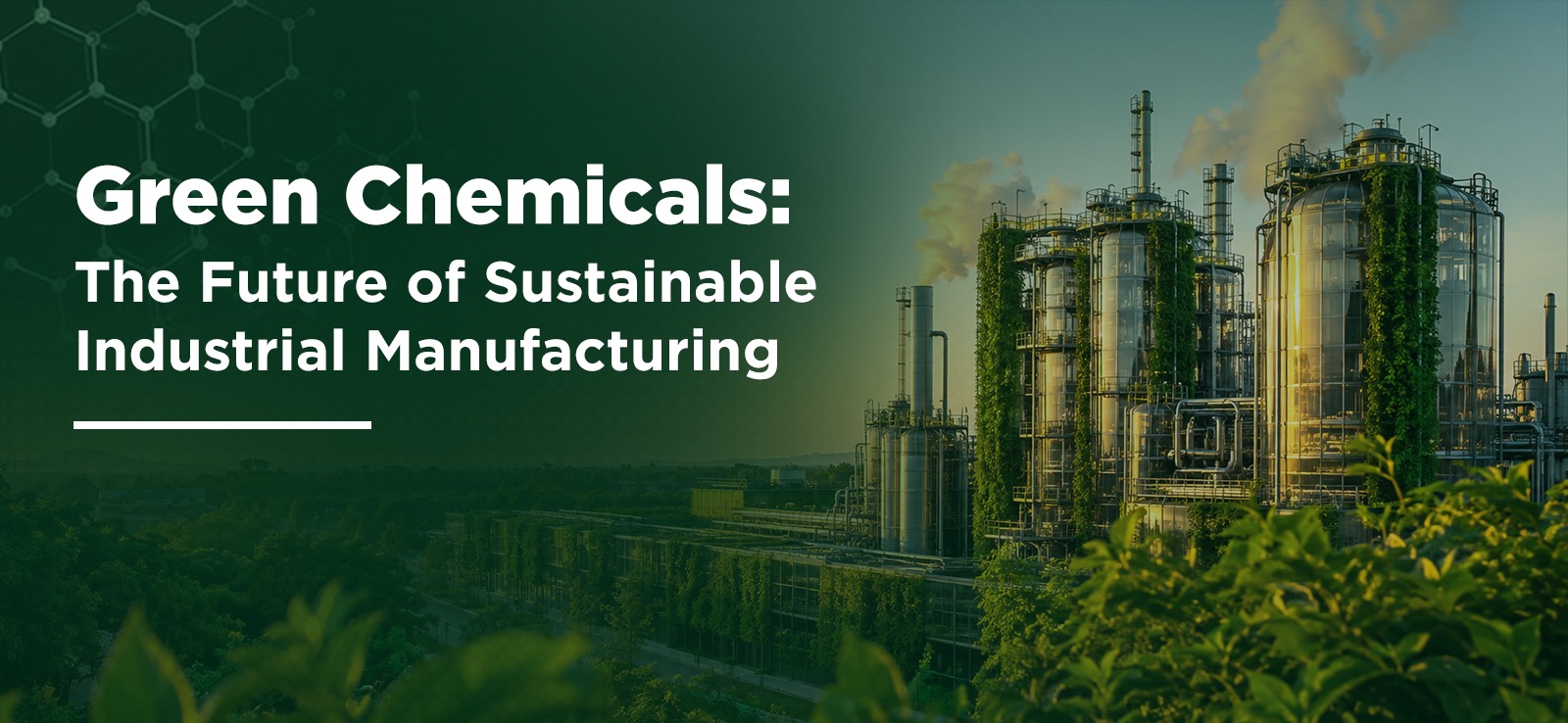
Walk into any factory today, and you will find machines running faster, output targets climbing higher, and somewhere in the background, a quiet but urgent question: what is all this doing to the planet? For decades, industrial manufacturing has leaned on chemical processes that get the job done but leave behind a heavy footprint, toxic solvents, hazardous waste, and energy-hungry reactions. That story is changing. Green Chemistry is no longer a niche idea limited to discussions. It is now a working philosophy.
What Are Green Chemicals, and What Does Green Chemistry Actually Mean?
Green Chemicals are products designed to do the same job as their conventional counterparts, solvents, dyes, adhesives, and catalysts, without the toxic baggage. They come from renewable feedstocks, break down safely instead of lingering in soil and water, and are manufactured using far less energy. The science behind them is Green Chemistry: the practice of designing chemical products and processes that reduce or eliminate hazardous substances at the source, rather than cleaning up after the fact. It is not about slowing manufacturing down. It is about making it smarter.
This shift matters because the old approach, treat pollution as an unavoidable cost of production, simply cannot keep pace with where the world is headed. Regulations are tightening. Consumers are asking harder questions about what goes into the products they buy. Investors want to see environmental risk managed, not ignored. Green Chemistry gives industry a real answer to all three pressures at once, and green chemicals are how that answer shows up on the factory floor.
India's chemical sector sits at an interesting crossroads. It is one of the largest contributors to the country's industrial output, and also one of the sectors facing the most scrutiny over emissions, effluents, and resource use. Pharmaceutical supply chains, textile dyeing units, agrochemical plants, and specialty chemical manufacturers are all being asked the same question by regulators and global buyers alike: can you produce this more cleanly?
This is exactly where Green Chemistry earns its place, not as an add-on but as a redesign principle. When a pharmaceutical company swaps a hazardous solvent for a biodegradable green chemical, or a textile unit adopts a dyeing process built on safer, bio-based inputs, the benefits stack up quickly: lower compliance risk, lower long-term operating cost, and better standing with international buyers who increasingly demand greener supply chains.
From Lab Bench to Factory Floor
One of the biggest myths around sustainable chemistry is that it lives only in university labs, far from the pressures of real production lines. The truth is more encouraging. Across India, green chemicals built on Green Chemistry principles are already showing up in commercial-scale operations, from bio-based solvents and safer catalysts to recovered and reused process inputs that were once treated as waste.
The challenge has never really been the science. It has been the gap between what researchers know is possible and what industry has the confidence, capital, and knowledge to implement. Bridging that gap is precisely the work that organisations like the Green ChemisTree Foundation have been doing since 2009. Rather than treating this as an academic pursuit alone, the Foundation has built a connected ecosystem linking industry, academia, research institutions, and government bodies, all working to move green chemicals and sustainable processes from theory into everyday manufacturing practice.
The Business Case Is Getting Harder to Ignore
There was a time when sustainability initiatives were treated as a cost centre, something companies did for image rather than impact. That thinking is fading fast. Green Chemistry is increasingly a competitive advantage, and green chemicals are its most visible output. Cleaner inputs often mean lower raw material waste, reduced water and energy consumption, and fewer regulatory headaches down the line. For companies exporting to markets with strict environmental standards, it can be the difference between winning a contract and losing one.
Every conventional chemical replaced with Green Chemicals is one less source of toxic exposure for factory workers, one less contaminated water body downstream, one less contribution to the climate burden the next generation will inherit.
What the Future Looks Like
The path ahead is not about a single breakthrough chemical or technology. It is about an entire manufacturing mindset shift, one where green chemicals are the default choice, not the alternative. As more industries, from pharma to specialty chemicals to textiles, adopt Green Chemistry as a standard rather than an exception, the ripple effects will reach supply chains, export competitiveness, and environmental outcomes all at once.
The foundation for that future is already being built today, through research collaborations, industry platforms, and knowledge exchange forums that keep pushing this movement from concept to practice.

Image Source: GreenChemisTree Foundation website
Ready to Be Part of the Shift?
The move toward sustainable industrial manufacturing is not something that happens on its own. It needs manufacturers willing to rethink old inputs, innovators willing to bring new green chemicals to the table, and platforms that bring both sides together. If your organisation is exploring how to adopt Green Chemistry in your operations, or if you have a solution the industry needs to see, connect with the Green ChemisTree Foundation today at greenchemistreefoundation.co.in and become part of the movement building a cleaner, more sustainable future for Indian manufacturing.